
Fifteen years ago this question was simple: oil-based polyurethane was the professional standard and water-based was considered a weaker "eco" alternative. That has completely flipped. In 2026, modern water-based formulas match oil-based for durability, beat it on dry time and odor, and stay clear instead of yellowing. About 80% of our refinishing jobs in Maryland now use water-based polyurethane.
But oil-based still has a place. If you want a deep amber glow on red oak or you are sealing a historic pine floor, oil is still the traditional answer. Here is the full breakdown.
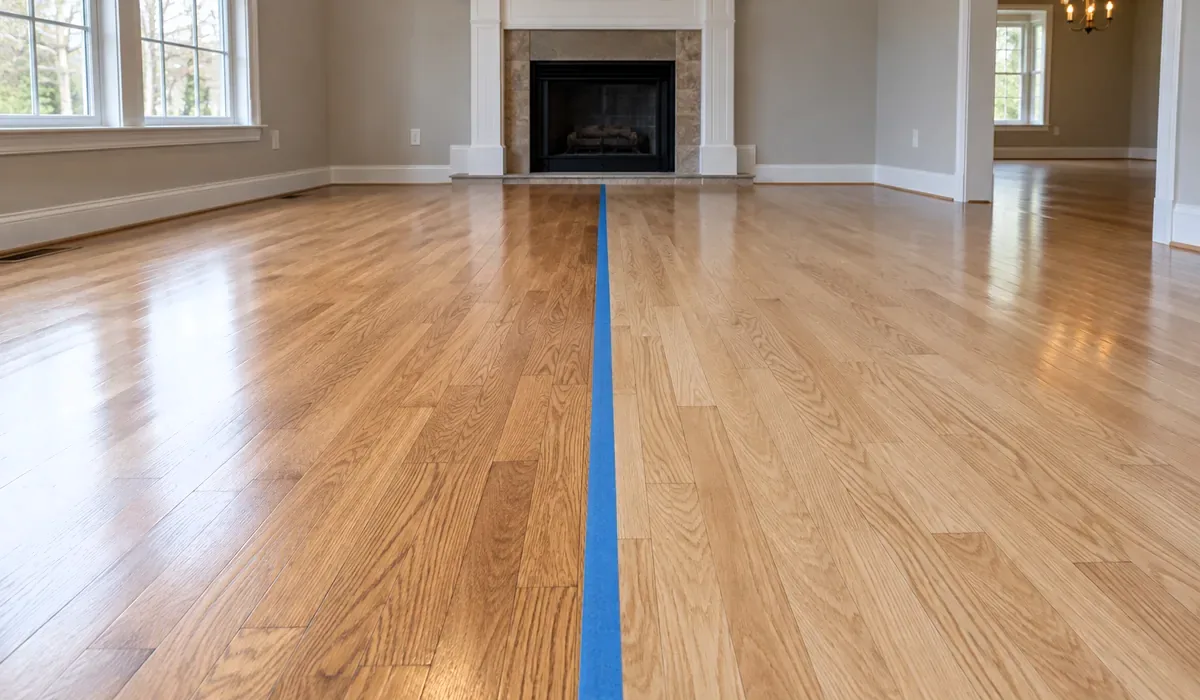
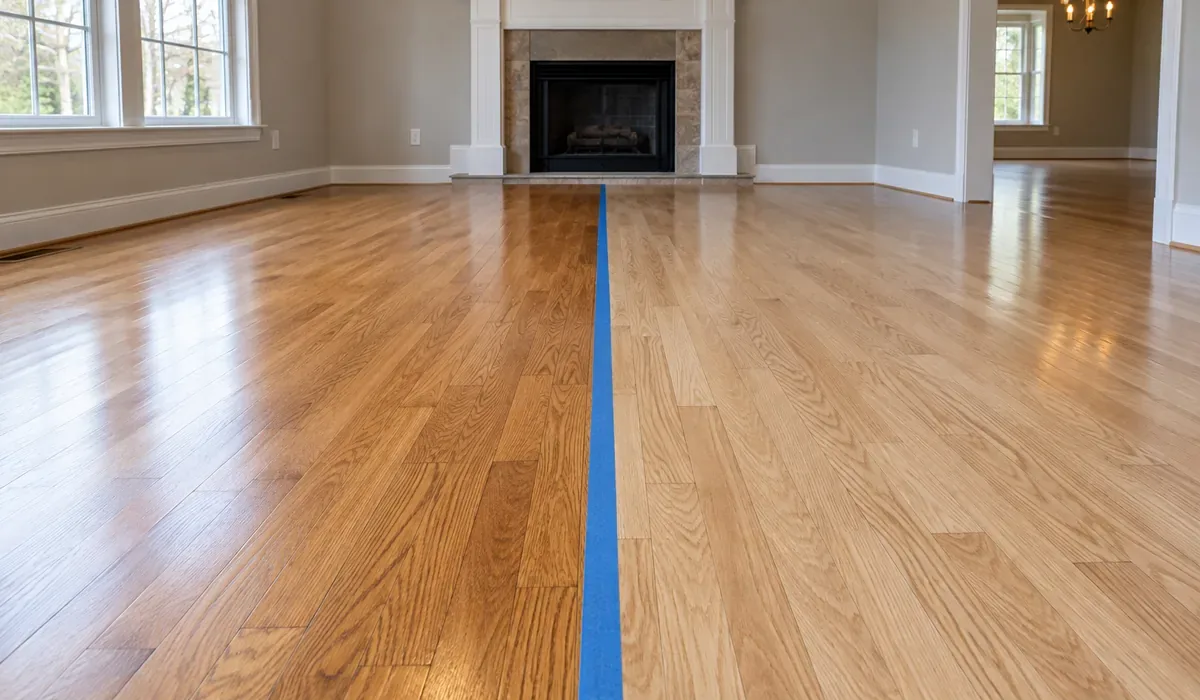 Oil-based: slightly warmerWater-based: clear
Day one
Slide it: fresh natural vs. years under oil-based amber
Drag the handle across each floor. On the left is the floor finished with a Bona water-based natural sealer and finish; on the right is the same floor as it can look after years under an oil-based finish. Red oak deepens to a honey orange. White oak shows it most: pale grey-beige turns yellow-gold.
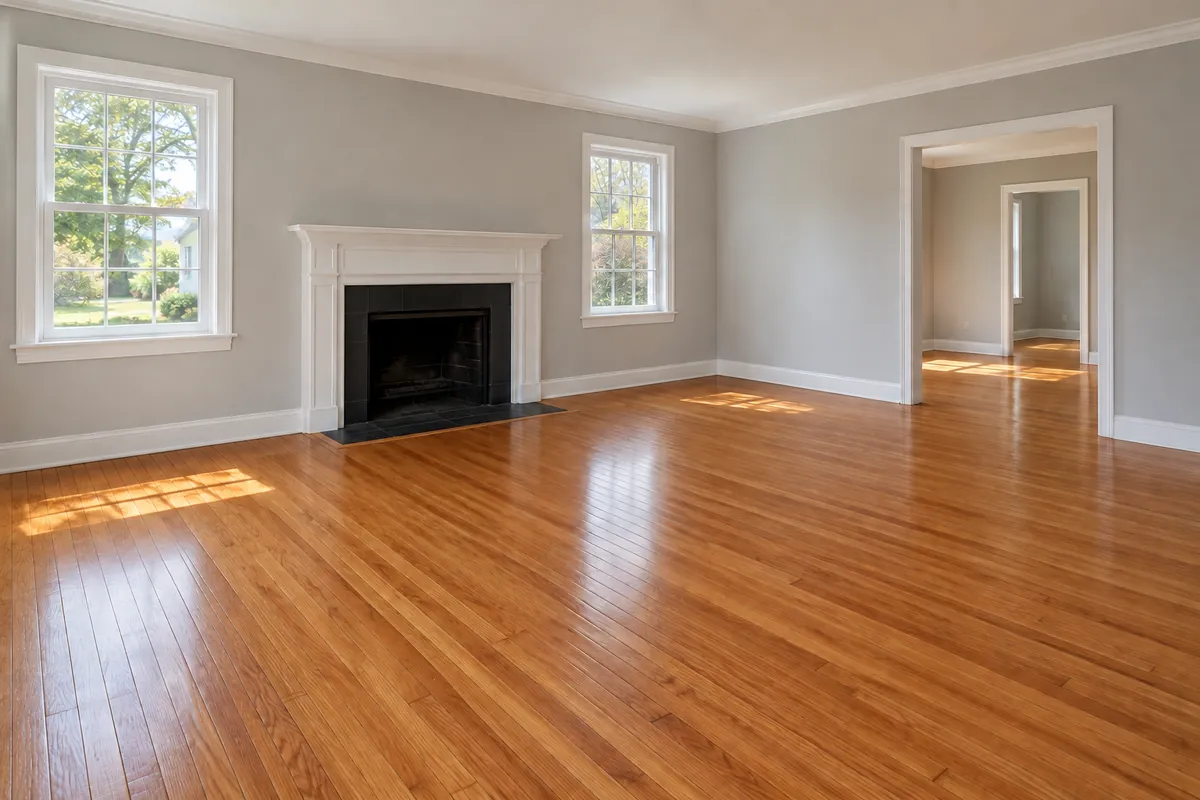
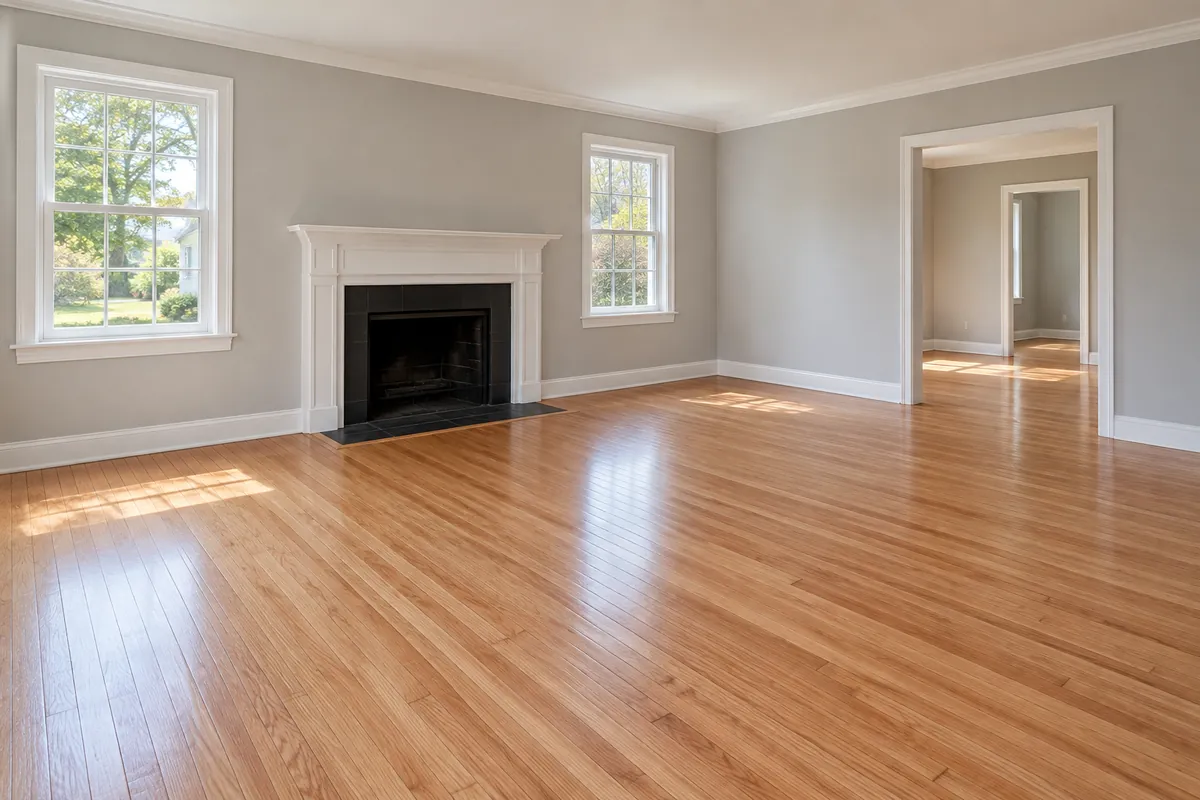 Bona water-based natural sealer + finishOil-based, years later
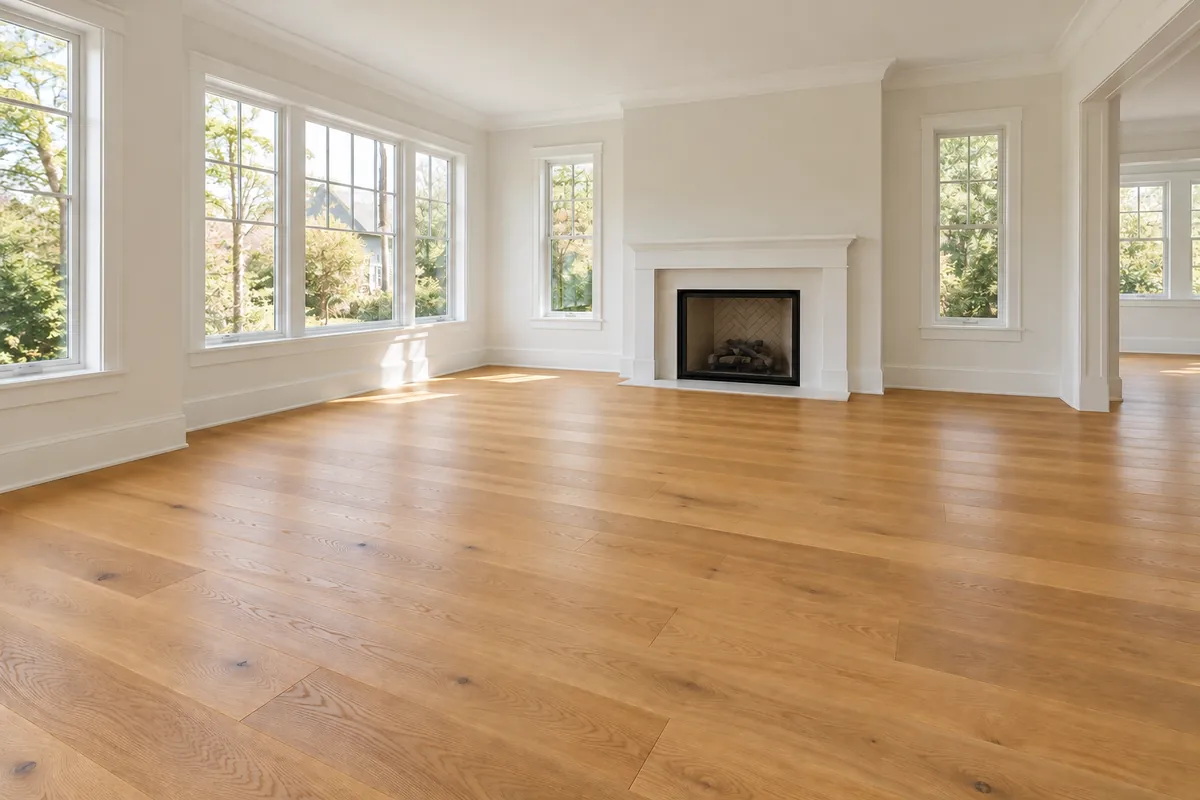
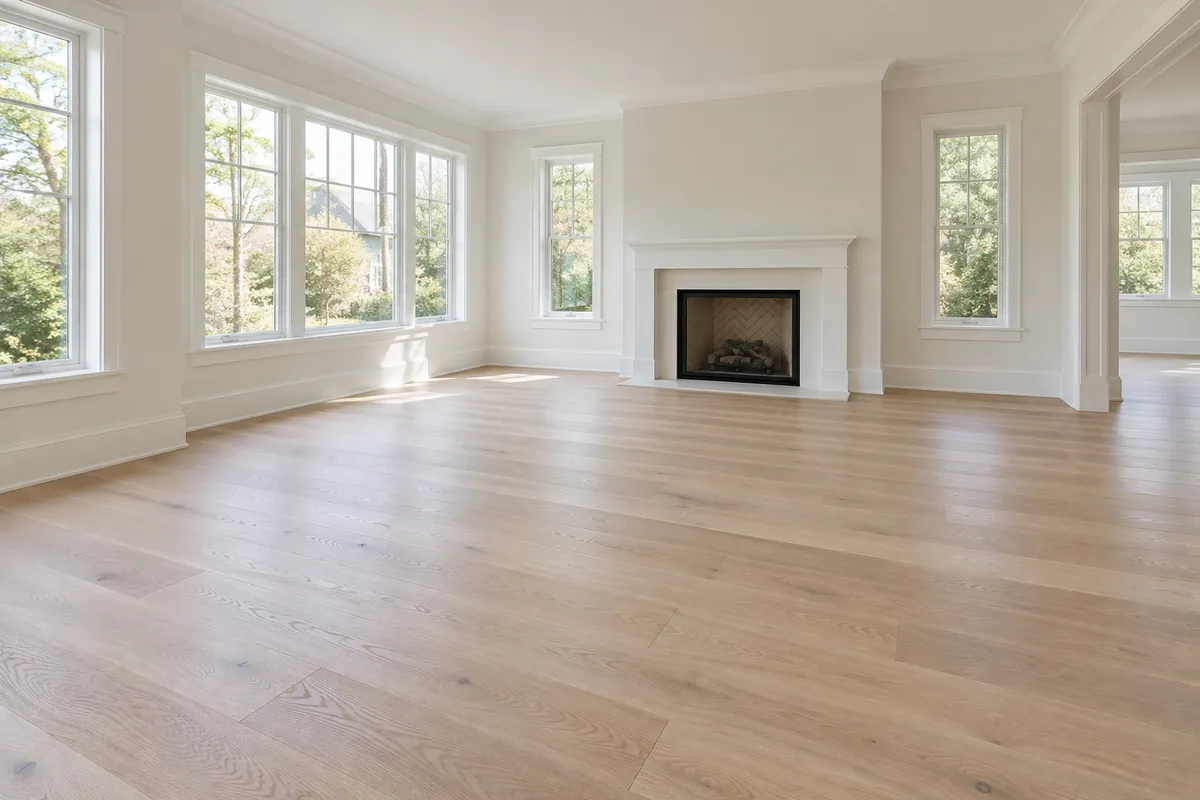 Bona water-based natural sealer + finishOil-based, years later
Quick Comparison Table
| Factor | Oil-Based | Water-Based |
|---|---|---|
| Dry time between coats | 8 – 24 hours | 2 – 3 hours |
| Full cure time | 21 – 30 days | 7 – 14 days |
| Odor / VOC level | Strong solvent smell that lingers for days. Sold at up to 275 g/L in Maryland (the legal limit); 350–550 g/L versions are made for other states | Mild smell that clears fast. Often 150–275 g/L (Bona Traffic HD: 150 g/L). Same 275 g/L legal limit |
| Color / tone | Amber, warm | Clear, neutral |
| Yellowing over time | Yes (progressive) | No |
| Durability (residential) | 7 – 10 years | 8 – 12 years (premium) |
| Material cost per gallon | $40 – $60 | $65 – $110 |
| Coats needed | 3 | 3 – 4 |
| Project timeline (about 1,000 sq ft) | 3 – 4 days | 2 – 3 days |
| Safe to sleep in home | After 72 hours | After 24–48 hours |
My 2026 default for Maryland homeowners: Premium water-based polyurethane (Bona Traffic HD or Loba 2K Supra) at 3 coats. It gets you back in your house faster, has much lower odor, stays clear for decades, and is at least as durable as oil-based. The extra $200–$400 in material cost is worth it almost every time.
Dry Time & Project Timeline
This is where water-based wins decisively. Oil-based polyurethane needs at least 8 hours, and often a full day, between coats because the solvent has to evaporate and the oil has to oxidize (chemically react with air). It can look dry well before that while still being tacky underneath; walk on it or screen it early and it marks and clogs the pad. You get one coat per day at best. On about 1,000 square feet, our crews finish an oil-based refinish in 3–4 days on site.
Water-based dries by solvent evaporation alone — typically 2–3 hours between coats (Bona Traffic HD and Bona Mega data sheets). We can often apply two coats in one day. On the same 1,000 square feet, a water-based refinish takes our crews 2–3 days. For the full day-by-day breakdown, read our post on how long hardwood refinishing takes.
Cure Time Matters More Than Dry Time
Both finishes are walkable much sooner than they are fully cured. During cure, the film is still chemically hardening.
- Water-based: light traffic after 12–24 hours. Full cure takes 3 days for two-part finishes such as Bona Traffic HD and Loba 2K Supra and 7 days for Bona Mega; StreetShoe NXT asks for two weeks before rugs.
- Oil-based (professional oil-modified such as DuraSeal and Masterline): light traffic after drying overnight, furniture after 48 hours, rugs after 15–30 days; Bona puts full cure for oil-based at 14–30 days.
Why rugs wait: until the finish has fully cured it is still soft and marks easily (Bona, StreetShoe), and Loba warns that rug pads made with plasticizers can soften and discolor a finish. Put rugs back only after full cure, on a pad the finish maker approves. Furniture goes back with felt pads, lifted into place, never dragged.
Solid bar = the earliest the label allows; lighter bar = how long it can take. The first two rows share one scale (hours), the last is in days. Professional oil-modified data sheets (DuraSeal, Masterline, Glitsa, Lenmar, Varathane 275/350) call for 8–24 hours before screening and the next coat at 70–77°F and 50% humidity, and overnight to 48 hours before light traffic; furniture after 48 hours and rugs after 15–30 days. Water-based (Bona Traffic HD, Bona Mega, Loba 2K Supra, StreetShoe NXT): 2–3 hours between coats and 12–24 hours to light traffic. High humidity, cool temperatures, poor air movement, heavy coats, stain underneath and oily woods all stretch these times, and a buff and recoat needs the same full dry time per coat as a new floor. An oil coat can look dry while it is still tacky: walk on it or screen it early and it marks and gums up the pad. In a cold or humid house our crews have seen an oil coat need up to 72 hours before it can be screened.
Durability: The Myth That Oil Is Stronger
The common belief that oil-based poly is more durable comes from 1990s-era water-based formulas that were genuinely weaker. Modern premium water-based products have closed that gap and in some metrics surpassed oil-based.
Bona’s own abrasion testing (Taber, ASTM D4060) ranks its two-part water-based finishes ahead of its oil-modified polyurethane; we found no independent head-to-head test, and the National Wood Flooring Association calls both types very durable. Scratch and indentation resistance are similar. The real-world lifespan difference on Maryland residential floors is negligible — both finishes are typically good for 8–12 years before needing refresh.
If your floor already shows damage, our guide to hardwood floor scratch repair covers when a touch-up stick, a buff and coat, or a full refinish is the honest fix.
What does matter: using a premium brand at 3 coats. A cheap water-based product at 2 coats will not last as long as a premium oil-based product at 3 coats. And a premium water-based product at 3 coats will outlast a cheap oil-based product at 2 coats. Product choice and coat count matter far more than category.
Color & Look: The Biggest Practical Difference
This is where the two finishes genuinely diverge and it is the #1 reason to choose one over the other.
Oil-Based Gives Amber Warmth
Oil-based polyurethane adds a warm, honey-amber tone to the wood — immediately on application and deepening over years of UV exposure. On red oak, this creates the classic "golden wood" look of homes from the 1980s and 1990s. On dark-stained woods it enriches and deepens the tone. On pine it can be beautiful.
Water-Based Stays Crystal Clear
Water-based polyurethane goes on milky white and dries completely clear. Zero amber tint. This preserves the exact color of the bare wood and any stain you applied. On white oak, maple, ash, or any gray/white-washed or cool-toned finish, water-based is the only correct choice — oil-based would turn a gray-stained floor into a yellow-green mess over 5 years.
The visual rule: If you want warm and traditional, oil-based on red oak looks spectacular. If you want modern, gray, white, or color-true, water-based is the only option. For natural finish on white oak, water-based preserves the clean look you chose the wood for.
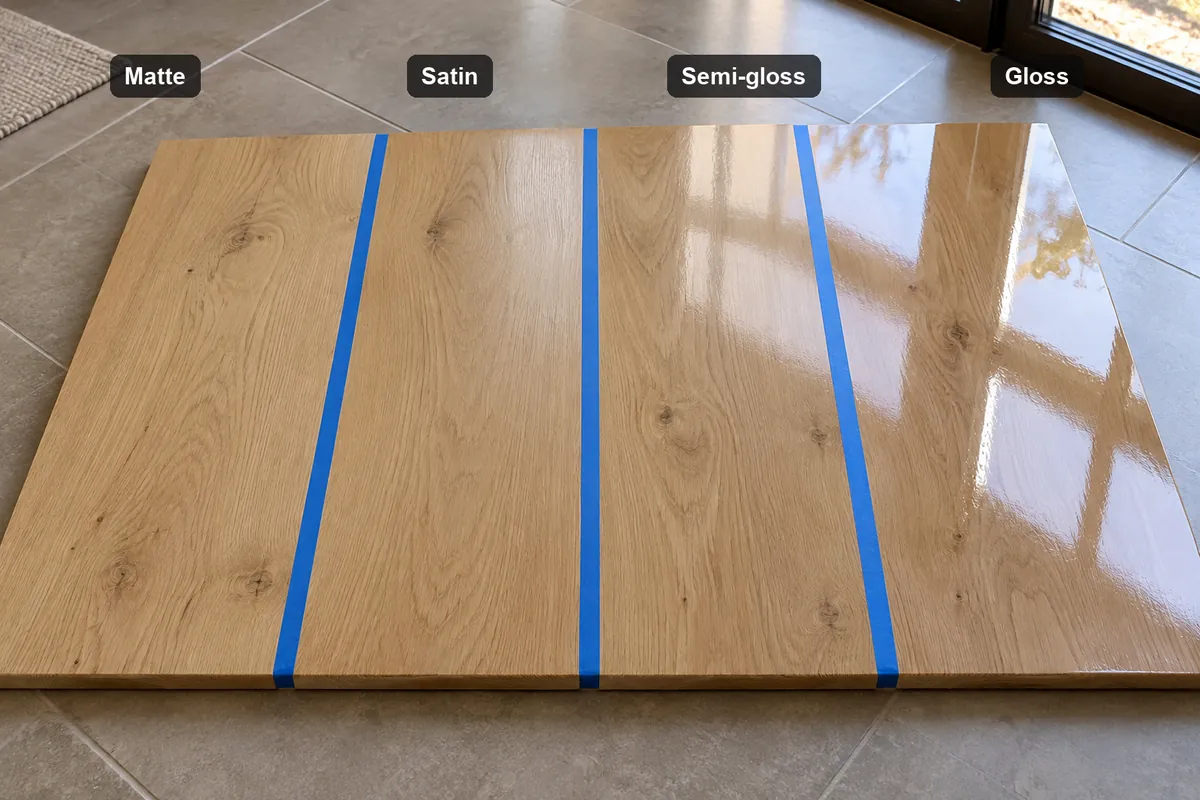
Sheen: Matte to Gloss
Both types come in several sheens, and the sheen changes how much light the floor throws back. Bona waterborne finishes run from extra matte to gloss; Minwax floor polyurethanes come in satin, semi-gloss and gloss, and DuraSeal and Varathane also offer matte. The sheen does not change the color difference between oil and water.
VOC, Odor & Household Safety
Oil-based polyurethane releases more solvent vapor (VOCs, volatile organic compounds) while it dries, and the smell is stronger and lasts longer. Oil-based floor finishes are commonly made at 350–450 g/L where that is allowed; in Maryland, clear wood finishes sold today are capped at 275 g/L. Bona advises that with oil-based you should plan to leave the home for an extended period.
Water-based polyurethane typically runs 150–275 g/L, and the smell is far milder and clears much faster. Bona says waterborne finishes do not require you to move out.
The Maryland rule: clear finishes made for wood floors count as “wood coatings” under Maryland’s VOC rule and are capped at 275 grams per liter (COMAR 26.11.39). The 100 g/L limit you may read about is for opaque floor paint, not clear polyurethane.
Air and ducts while it dries: the National Wood Flooring Association’s guidance is to keep the heating and air conditioning on its normal settings (not off) so the finish dries and cures properly, and to turn ceiling fans off so dust does not land in the wet coat. The EPA notes that indoor VOC levels can run several times higher than outdoors and recommends extra ventilation when using products that release them. With water-based finishes there is far less to air out.
Who Should Avoid Oil-Based
- Homes with young children
- Pregnant women
- Asthma or respiratory sensitivity
- Anyone who cannot leave the house during refinishing
- Small condos or poorly ventilated spaces
- Homes with indoor pets (especially birds, which are extremely sensitive)
Water-based is considered safe for the above groups, especially after 72 hours of ventilation.
Chemicals and Allergies: What the Safety Data Sheets Say
Every floor finish comes with a Safety Data Sheet (SDS) that lists its ingredients and hazard warnings. These warnings describe the liquid product while it is being mixed and applied, which is why the crew wears protection and the family stays out of the work area. Here is what the current sheets say for typical products of each type.
| On the safety data sheet | Oil-based, professional (example: DuraSeal Polyurethane, SDS 8/2026) | Water-based, two-part (example: Bona Traffic HD) |
|---|---|---|
| Main solvent | Petroleum distillate solvent (flammable); signal word “Danger” | Water; the finish itself (Part A) is “not classified” as hazardous under OSHA |
| Skin allergy warning | Yes: “May cause an allergic skin reaction” | Yes, for the hardener (Part B): “May cause an allergic skin reaction” |
| Other warnings | “May damage fertility or the unborn child”; “Causes damage to organs through prolonged or repeated exposure”; “May be fatal if swallowed and enters airways”. A popular retail oil polyurethane (Minwax Super Fast-Drying) also lists “Suspected of causing cancer” because of its cobalt drying agent. | Hardener: skin and eye irritation. It contains HDI isocyanate, which the CDC’s NIOSH calls a skin and breathing sensitizer for the people mixing and applying it |
| Who is exposed | Applicator, and anyone in the home while the solvent evaporates | Mainly the applicator while mixing and rolling |
What this means for your family:
- The hazard warnings on both types are about the wet product. Stay out of the rooms being finished, keep pets and children away, and follow the product label on when to come back.
- Oil-based carries more warnings and a much stronger, longer-lasting solvent smell, so it is the bigger issue for people with asthma, chemical sensitivity, pregnancy, or pets that stay in the home.
- We found no published case of a household allergic reaction to a fully cured floor finish of either type. In a federal health investigation of a solvent-based urethane floor finish (ATSDR, 2005), residents’ complaints were odors and irritation while it was curing, and vapor levels stayed raised for at least 43 hours.
- You can ask any contractor for the SDS of the exact products they will use.
Not Sure Which Finish Is Right for Your Home?
We bring sample blocks of both oil-based and water-based polyurethane so you can see the exact amber vs clear difference on your actual floor before deciding.
Call 240-444-0748 or Book Free Sample VisitYellowing: The Long-Term Disaster Scenario
Oil-based polyurethane yellows progressively over 5–15 years from UV exposure. The amber deepens. On warm-toned floors this enriches the color. On any floor where the owner wanted a specific modern color — gray, whitewash, weathered oak, natural white oak, Scandinavian pale — oil-based slowly destroys the intended look.
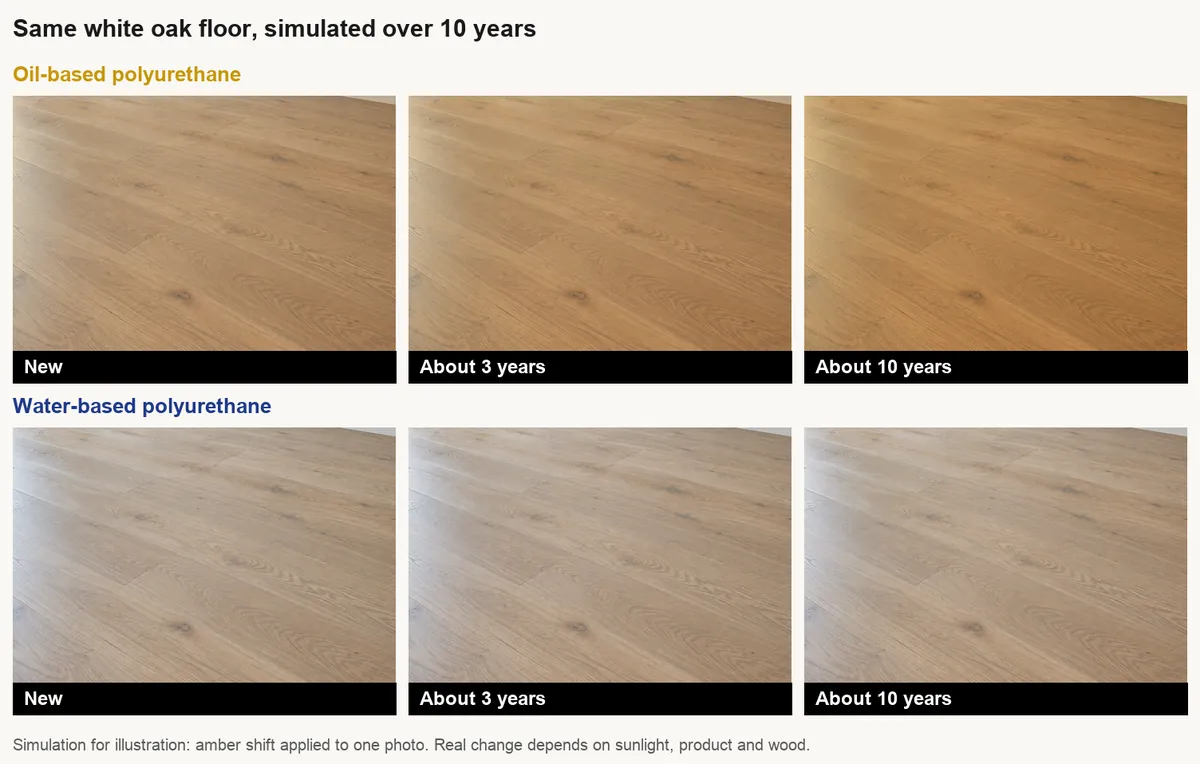
I have refinished white oak floors that were originally installed natural with oil-based poly 8 years earlier. By year 8 they looked like yellowed red oak. We had to sand to bare wood and refinish with water-based to get back to the original color. Those owners would have saved thousands if they had gone water-based the first time.
Two-part commercial water-based finishes such as Bona Traffic HD and Loba 2K Supra are made to stay clear and non-yellowing, so the floor keeps the color it had on day one. Not every water-based product is fully clear: Bona Mega and Minwax Ultra Fast-Drying say they add a slight amber tone. Ask which product your contractor will use.
Cost Comparison
| Project Size | Oil-Based Total | Water-Based Total | Difference |
|---|---|---|---|
| Single Room (250 sq ft) | $673 – $875 | $875 – $998 | about +$125 |
| Main Level (800 sq ft) | $2,152 – $2,800 | $2,800 – $3,192 | about +$400 |
| Whole Home (1,500 sq ft) | $4,035 – $5,250 | $5,250 – $5,985 | about +$750 |
| Large Home (2,500 sq ft) | $6,725 – $8,750 | $8,750 – $9,975 | about +$1,250 |
Interestingly, some contractors charge the same total regardless of finish because water-based saves them a day or two of labor. Ask upfront.
On our own published rate card, a natural refinish with 3 coats of oil-based polyurethane is $2.99 per square foot and 3 coats of water-based low-VOC is $3.50. With a stain, it is $3.50 (oil) or $3.99 (water-based). Every rate is in our Maryland hardwood floor refinishing price list, or you can price your floor with either finish in the flooring cost calculator. In Montgomery County? See our page on wood floor refinishing in Rockville.
10-Year Cost of Ownership: Oil vs Water
The price of the first refinish is only part of the bill. Over ten years you also pay for buff-and-coat visits (a light screening plus fresh coats) to keep the finish from wearing through. Put in your square footage and see both finishes side by side, using our published Maryland rates.
- Refinish today $2,392
- 2 buff & coat visits $2,864
- Furniture out & back (3 jobs) $675
- Job length, about 1,000 sq ft 3–4 days
- Days without area rugs 90 days
- Color at year 10 deep amber
- Refinish today $2,800
- 2 buff & coat visits $3,184
- Furniture out & back (3 jobs) $675
- Job length, about 1,000 sq ft 2–3 days
- Days without area rugs 21 days
- Color at year 10 stays clear*
Over 10 years, water-based costs $728 more on 800 sq ft, about $73 a year, and with a two-part finish it stays clear.
Today's published USA Pro Floors rates for oak: refinish natural, 3 coats: oil $2.99, water-based $3.50 per sq ft; stained: oil $3.50, water-based $3.99. Buff and 2 coats: oil $1.50, water-based Bona $1.75 per sq ft. Furniture: each job moves it out and back once, $50–$100 per room (the tool uses $75). Job lengths are from our own crews. Days without rugs count every visit at 30 days for oil-based and 7 days for water-based (the longer manufacturer cure times). Future price changes, stairs and repairs are not included. *Two-part water-based finishes such as Bona Traffic HD. Full rate card · Instant estimate for your rooms
In Maryland, DC or Northern Virginia? We bring oil and water-based sample boards and lay them on your own floor, so you see the color before you choose.
Book a free sample visit Call 240-444-0748Resale & Market Perception in Maryland
In 2026, water-based polyurethane is the premium default in new construction and high-end renovations across Maryland. Listing agents in Annapolis, Crofton, and Ellicott City typically advertise "water-based poly, non-yellowing" as a feature. Oil-based is still accepted but increasingly seen as traditional or dated on modern homes.
If you are planning to sell within 5 years, water-based is the safer resale choice. If you are in a historic home or want that classic amber look intentionally, oil-based remains legitimate.
Special Cases Where Oil-Based Still Wins
- Historic restorations: Original heart pine or chestnut floors in old Baltimore rowhouses benefit from oil-based's amber enrichment and grain-penetrating quality.
- Deep red oak traditional: If you want the classic 1990s amber red oak look, oil delivers it immediately.
- Commercial settings with no occupant: If the building is unoccupied during cure, oil's longer timeline does not matter and the finish is proven.
- Deep stains that need penetration: Very dark ebony or weathered gray stains sometimes seal better under an oil-based topcoat.
My Blunt 2026 Recommendation
Default to premium water-based polyurethane at 3 coats for 80% of Maryland homes. Pay the extra $200–$500. You get:
- Your house back 1–2 days sooner
- No weeks of chemical smell
- A finish that stays color-true for decades
- Equivalent durability to oil-based
- Better fit for modern (white, gray, natural) color trends
- Better fit for households with kids, pets, or sensitivities
Use oil-based only when you specifically want amber warmth, are restoring a historic floor, or are working on traditional red oak where the classic look is desired.
Frequently Asked Questions
Sources: Bona, oil vs water-based; Bona Traffic HD data sheet; Minwax floor polyurethane; NWFA; COMAR 26.11.39.05; EPA indoor air; DuraSeal SDS; Minwax SDS; Bona Traffic HD hardener SDS; NIOSH isocyanates; ATSDR 2005; Loba 2K Supra.